How Potholes Really Form:
The Subsurface Reality.

Potholes are not primarily a surface material problem; they are a water and pressure management problem. Discover how trapped subsurface water creates the hidden hydraulic pressure that destroys traditional repairs from the inside out.

The Traditional Thinking:
Surface Failure

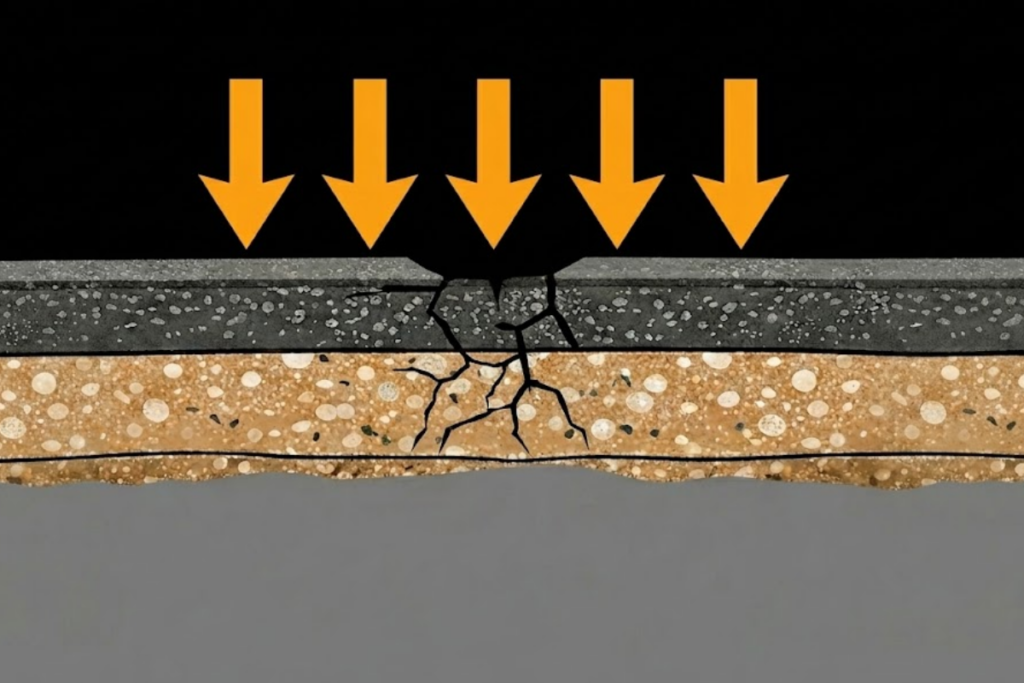
Cross-section diagram illustrating the myth of pothole surface failure, showing downward arrows representing traffic pressure on a cracked carriageway.

The widely accepted view blames surface cracks, weather, and freeze-thaw cycles for road failure. While these are factors, treating them as the only cause means traditional repairs merely patch the surface, ignoring the destructive forces hidden beneath.

The Reality:
Subsurface Hydraulic Failure

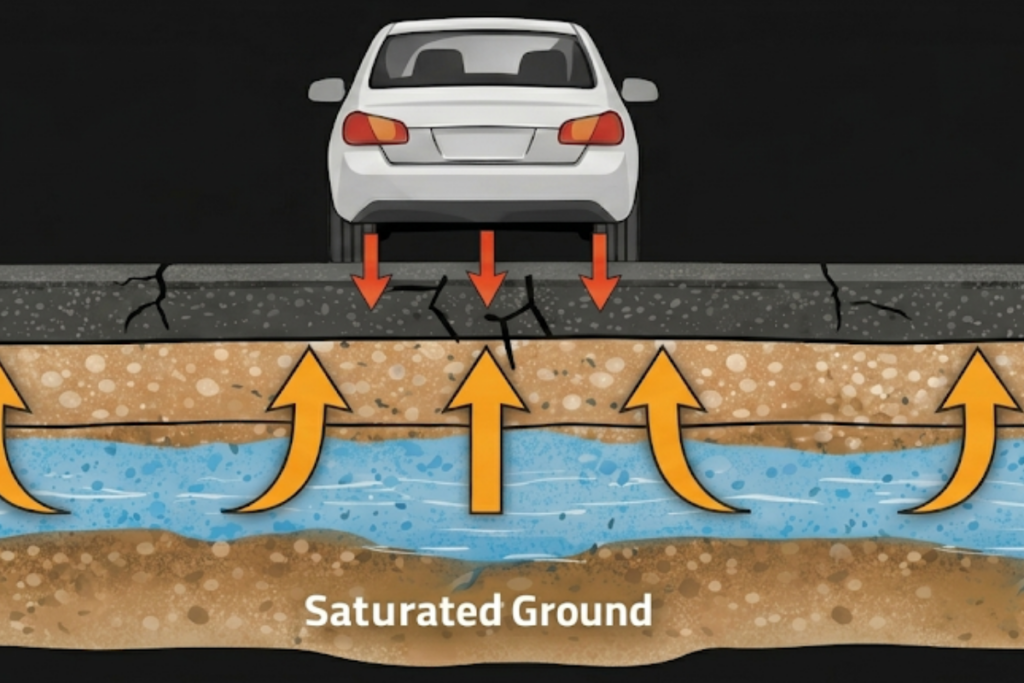
Diagram showing the reality of subsurface hydraulic failure, where a vehicle tyre forces trapped water upwards, debonding the pothole repair from beneath.

The true culprit is subsurface hydraulic failure. Under the heavy load of passing traffic, water trapped beneath the road surface is subjected to immense hydrostatic pressure, forcing it upwards and debonding the patch from the inside out.

The Hidden Mechanism of Failure

When traffic passes over a saturated section of the carriageway, it creates a high-pressure “pumping action”. This immense upward hydraulic force relentlessly erodes the underside of the wearing course, directly between the road surface and the base. Over time, this erosion leaves behind hidden air pockets and voids. When the water eventually recedes, these unsupported voids remain. Unable to bear the weight of passing vehicles, the weakened surface eventually cracks and breaks open to form the typical pothole.

The Flaw in Traditional Patching

Standard ‘tar and chip’ reactive maintenance simply seals the top of the hole, trapping the subsurface water all over again. Because the root cause is ignored, the hydraulic pressure rebuilds, the pumping action resumes, and the repair inevitably fails. This locks the UK into a costly repeat-repair cycle in excess of 1.5 million repairs a year, with a cost of over £150 million.

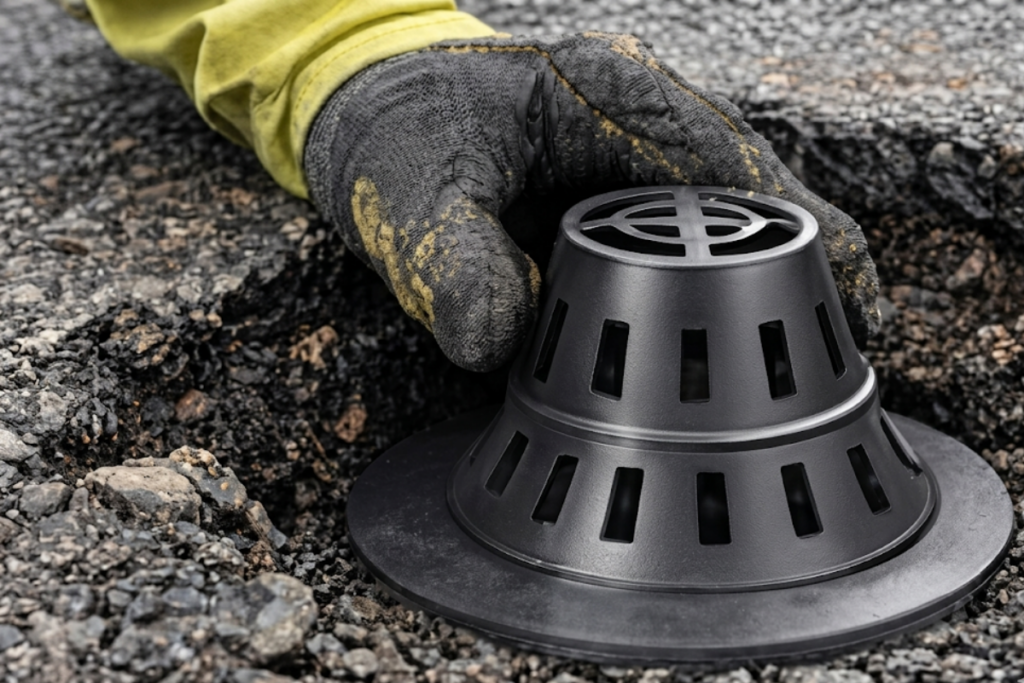
A highway contractor's gloved hand placing the PaveVent™ hydraulic pressure relief insert into a prepared pothole.

Stop Patching. Start Venting.

If potholes are a pressure management problem, the solution isn’t just more surface asphalt, it is hydraulic pressure relief.

Pothole Formation FAQs

What is the true root cause of potholes?

While traditional thinking blames surface cracks, weather, and freeze-thaw cycles, the primary hidden cause of repeat pothole failure is subsurface hydraulic pressure. Heavy traffic forces trapped groundwater upwards, aggressively eroding the road from the inside out.

Standard “tar and chip” repairs only seal the top of the hole, ignoring the trapped water beneath. When traffic passes over the newly sealed repair, the hydraulic pumping action simply resumes, forcing water upwards until it breaks the new patch apart.

When heavy vehicles drive over a water-saturated road, they act like massive hydraulic pumps. The immense downward weight compresses the carriageway, forcing trapped subsurface water violently upwards into the wearing course. This repeated action strips the asphalt, leaving behind hidden voids that eventually collapse into potholes.