The Story Behind PaveVent™

PaveVent™ founders Steve and Sarah Bays standing by their car, looking frustrated at a severe road pothole marked by a traffic cone.

From Frustration to Innovation

Like millions of drivers across the UK, Steve and Sarah Bays were tired of dodging craters on their local roads. The national pothole crisis had reached a breaking point, with councils facing an £18.6bn repair backlog and paying out millions in vehicle damage compensation. But what frustrated Steve the most wasn’t just the potholes themselves, it was watching the exact same holes being repaired, only to break open again just a few months later. He recognised that traditional “tar and chip” methods were merely patching the surface and ignoring the destructive forces hidden beneath.

The Lightbulb Moment!

The breakthrough didn’t come from a civil engineering boardroom. Steve’s “lightbulb moment” was actually inspired by watching how water and pressure interacted in a simple child’s toy. He realised that the highway industry was treating potholes as a surface material problem, when in reality, they were a subsurface hydraulic pressure problem. Every time a heavy vehicle passed over a saturated road, the trapped water was forced upwards, relentlessly eroding the patch from the inside out

PaveVent™ founder Steve Bays holding the children's water toy that inspired the pothole relief device, shaking hands with a headmaster outside a local school.

Developing the Prototype

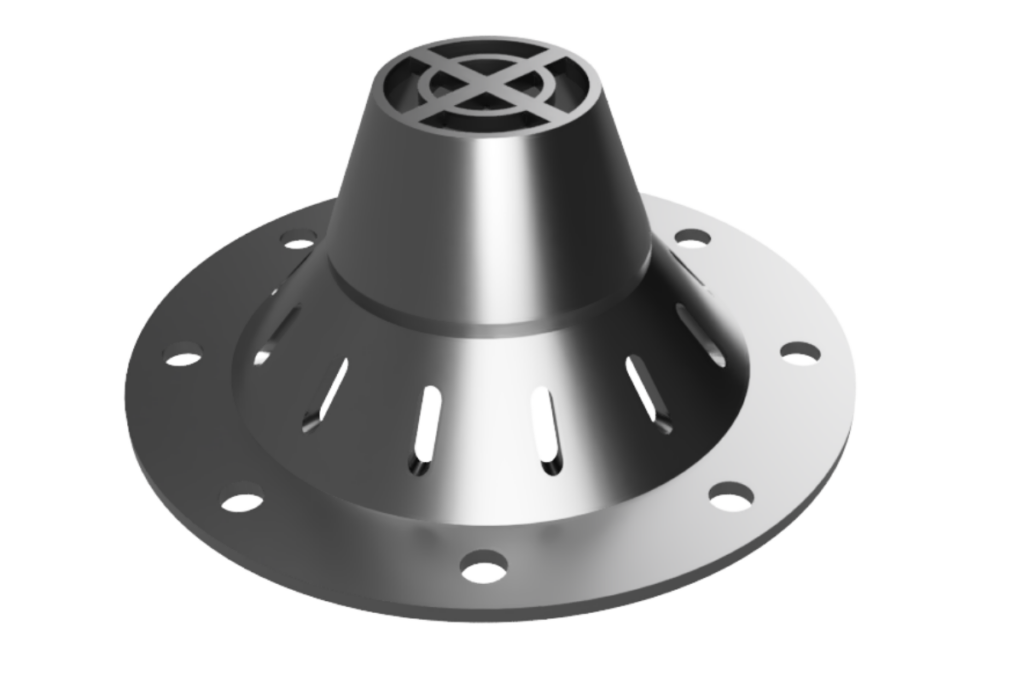
Using his background in design and engineering, Steve took this insight into his workshop and began drafting an engineered solution. The goal was to shift the industry paradigm: stop patching the surface, and start venting the pressure. This led to the creation of the PaveVent™  device a simple, highly robust, funnel-like drainage insert designed to be embedded directly within the asphelt to channel trapped water safely to the surface.

Academic Validation (Working with the Experts)

To take the concept from a workshop prototype to a fully validated carriageway component, Steve and Sarah knew they needed undeniable science. They collaborated with leading academic experts, specifically Dr Nicholas Thom at the University of Nottingham and Dr David Woodward at Ulster University. Together, they subjected the device to rigorous laboratory testing, including hydraulic pumping simulations and 50,000 cyclic wheel passes in a road simulator. The PaveVent™ mechanism is now further underpinned by an independent physics paper exploring subsurface hydraulic dynamics.

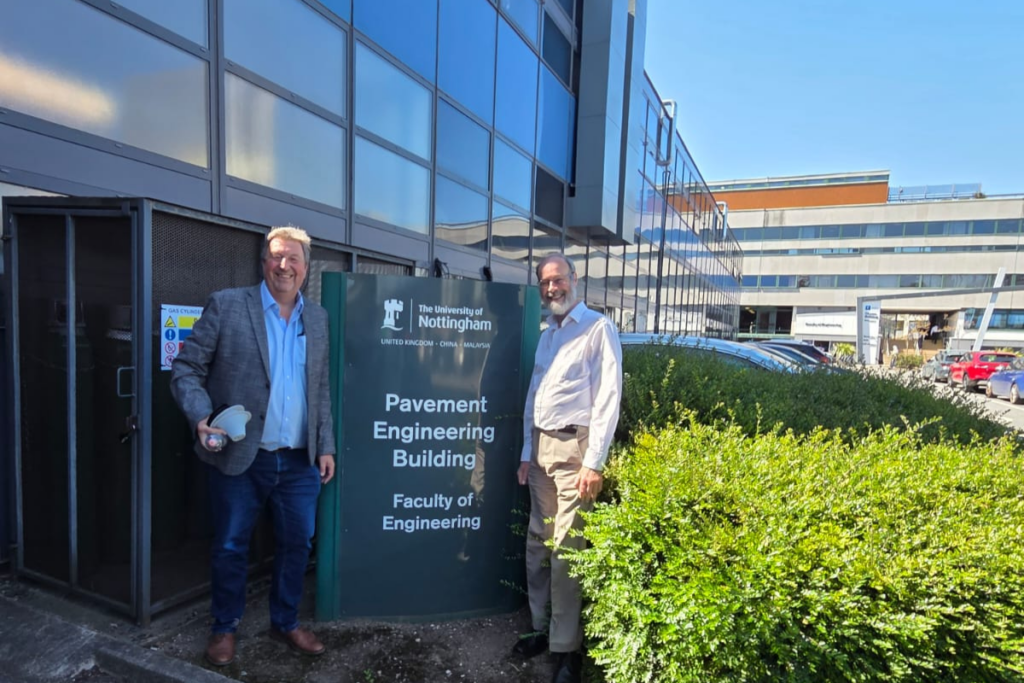
Steve Bays and Professor Nicholas Thom standing outside the Pavement Engineering Building at the University of Nottingham's Faculty of Engineering.
Steve Bays observing the PaveVent™ pothole relief device undergoing physical manufacturing and testing on a conveyor.

The Path to Market

Today, PaveVent™ is protected by an active Provisional Patent Application and is progressing toward full UK and US patent protection. To bring the product to the commercial market, Steve and Sarah are taking a highly strategic, evidence-based approach. Instead of simply trying to sell the product outright, they are currently inviting forward-thinking local councils to participate in controlled, real-world field trials, and preparing applications for initiatives like the UK Government’s Freight Innovation Fund.

Partner With Us

The long-term vision is to establish PaveVent™ as a standard consumable within UK highway framework contracts, with the opportunity to eventually scale globally through licensing and manufacturing partnerships. Steve and Sarah are now actively seeking local authorities and framework contractors to help put an end to the costly repeat-repair cycle.